



Breasts or Butt? What Do Men Really Find More Attractive?

"If you could only choose one—breasts or butt?"
This question has fueled endless debates among men, with "Team Breast" and "Team Butt" never reaching a consensus. But what does the actual science say?
The Evolutionary Code: Attraction Is About Survival, Not "Taste"
Male attention toward female breasts and buttocks isn't a modern superficiality. It's hardwired by millennia of natural selection. In ancestral environments, a man’s mate choice directly impacted offspring survival, so the brain evolved an automatic "reproductive fitness scanning system."
Breasts: Signals of Nurturing and Estrogen
From an evolutionary standpoint, breasts are a billboard for fertility and health status. Symmetrical, well-shaped breasts are subconsciously decoded as "young, estrogen-replete, and capable of lactation"—high-value mate signals across virtually all cultures. Research consistently shows that men rate larger breasts as more attractive, linking them to perceived nurturing capacity and maternal warmth.
More importantly, breasts trigger the brain’s reward circuitry. When men view preferred breast morphology, dopamine floods the nucleus accumbens, producing pleasure and desire—an effect amplified by cultural media that endlessly equates "breasts = sex appeal."
Butt: A Biosignal for Safe Childbirth
If the breasts are the "first impression," then the attractiveness of the hips lies in a more subtle proportion.
The key isn't "size," but the waist-to-hip ratio (WHR). Multiple cross-cultural studies worldwide point to the same number: 0.7—a ratio where the waist circumference is approximately 70% of the hip circumference—which is considered most attractive in most cultures.
A WHR of 0.7 signifies healthy fat distribution and normal estrogen levels, while full, well-proportioned hips suggest a wide pelvis. In ancient times, this was directly related to safe childbirth. In other words, the male brain's preference for this body type is essentially scanning for biosignals related to "safe childbirth and healthy offspring."
The Data Vote: 59% vs 38.5%, the butt narrowly win?
Theory is one thing, but experimental data is the real test.
An eye-tracking experiment in Argentina involving 184 men yielded a controversial conclusion: 59% of men showed stronger visual attraction to buttocks, while only 38.5% preferred breasts. Researchers allowed participants to freely browse images of women, tracking their eye lingering time and focal points. The results showed that buttocks had a significantly higher "eye-catching index."
Breast vs. Butt: Two Different "Playstyles"
Since science tilts slightly toward buttocks, why does "Team Breast" remain so vocal?
Because these two preferences trigger fundamentally different psychological mechanisms:
| Dimension | Breast Attraction | Buttock Attraction |
| Core Signal | Lactation capacity, maternal warmth, estrogen levels | Reproductive efficiency, WHR, locomotor advantage |
| Visual Focus | Frontal symmetry and curvature | Lateral/ posterior arc and proportion |
| Cultural Reinforcement | Lingerie ads, classic cinema | Fitness culture, denim fashion, pop music |
| Psychological Association | Security, intimacy, being cared for | Vitality, wildness, sexual tension |
Culture and personal experience heavily rewrite these default settings. Media overexposure to one feature, imprinting from early romantic experiences, or social circle aesthetics can all reshape preference rankings.
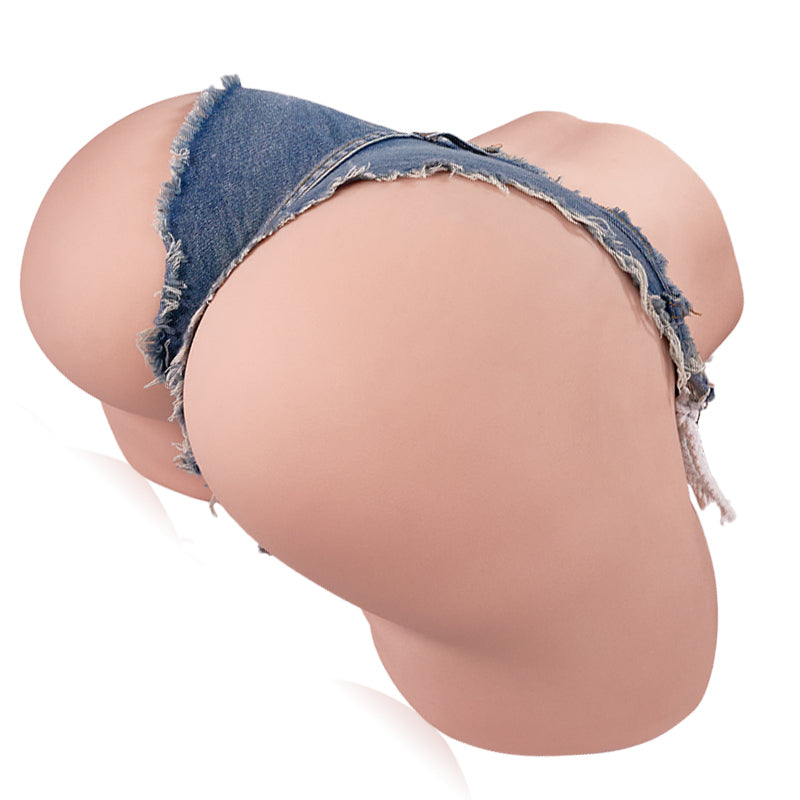
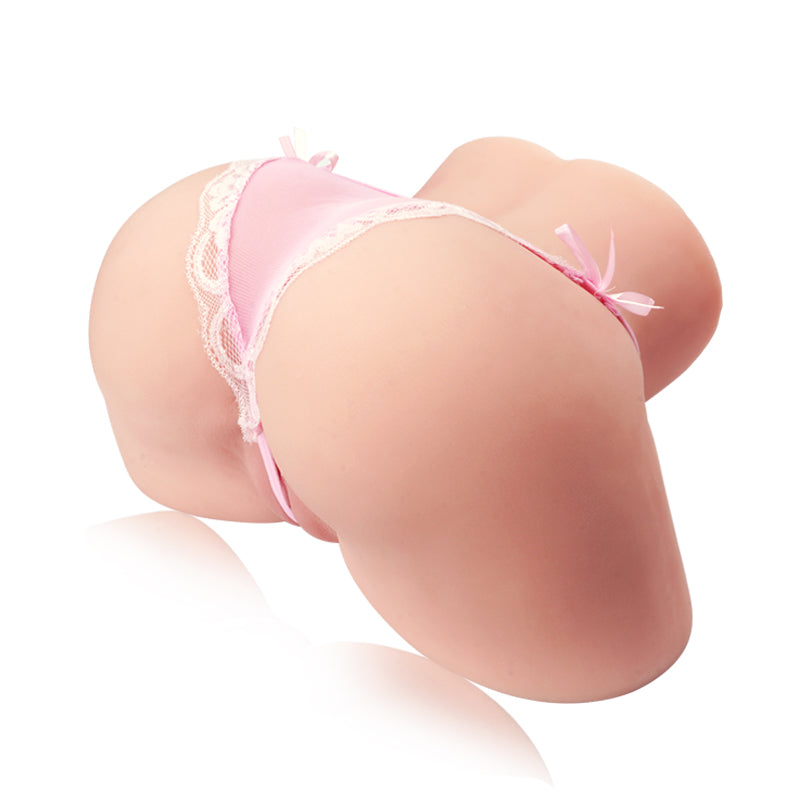
For those who already know where they stand, the choice is simple. If you gravitate toward powerful curves and commanding hip aesthetics, explore the Big Ass Sex Dolls—where waist-to-hip ratio and lumbar arc are dialed to their maximum expression. If soft, voluptuous upper-body lines are more your language, the Big Boobs Sex Dolls offers designs that prioritize breast symmetry, projection, and proportion.
Conclusion: The Code Is "Fit," Not "Part"
Returning to the initial question—breasts or butt?
The scientific answer is: Butts have a slight edge in visual appeal, but breasts are equally compelling in cross-cultural universality and the depth of psychological association. More importantly, true and lasting attraction never comes from an isolated feature, but from the right person.